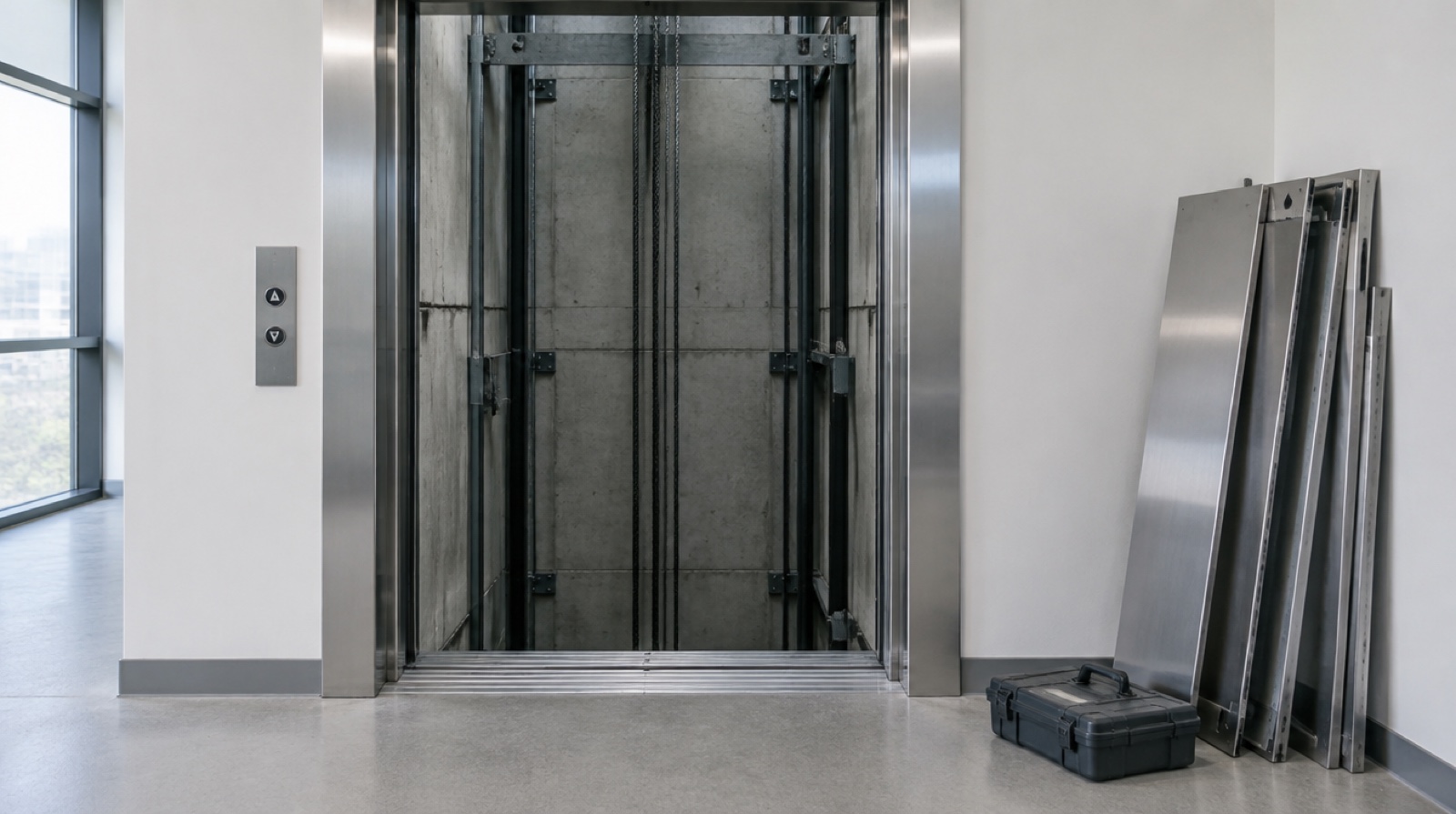
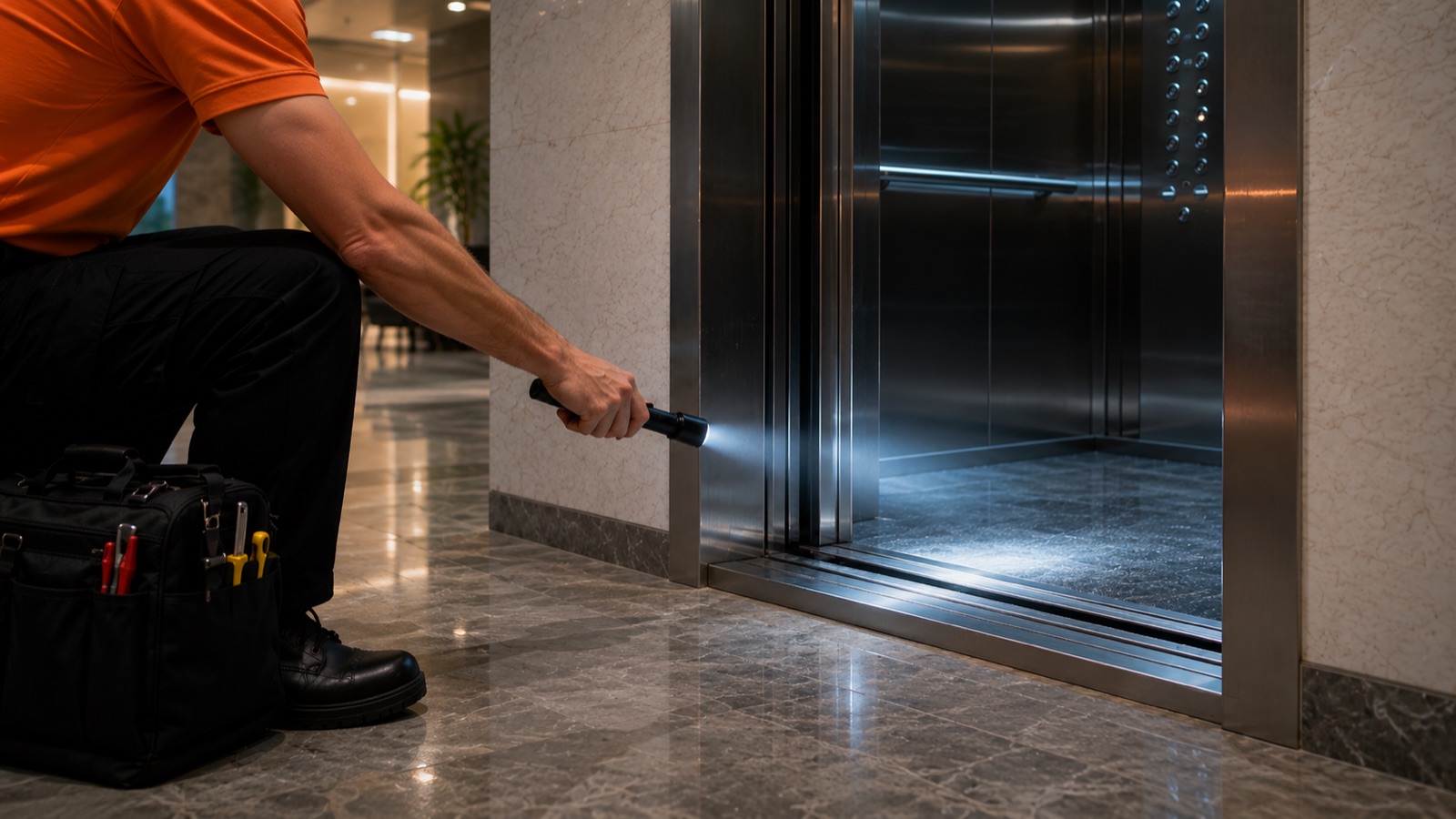
What Is Door Lock Monitoring?
Door lock monitoring is one of the most important safety systems inside any modern elevator. It is a continuous electronic verification process that confirms two critical conditions before the elevator can move: the hoistway door is fully closed, and the door interlock is mechanically engaged. If either condition is not met, the elevator cannot start, and if either fails during travel, the car will stop and shut down.
This system is the difference between a routine ride and a catastrophic fall into the hoistway. At BROUSS Elevators, every modernization project we perform in Florida includes a full evaluation of the door lock monitoring system, because it is the most common point of failure in legacy elevators.
How the Door Lock Monitoring System Works
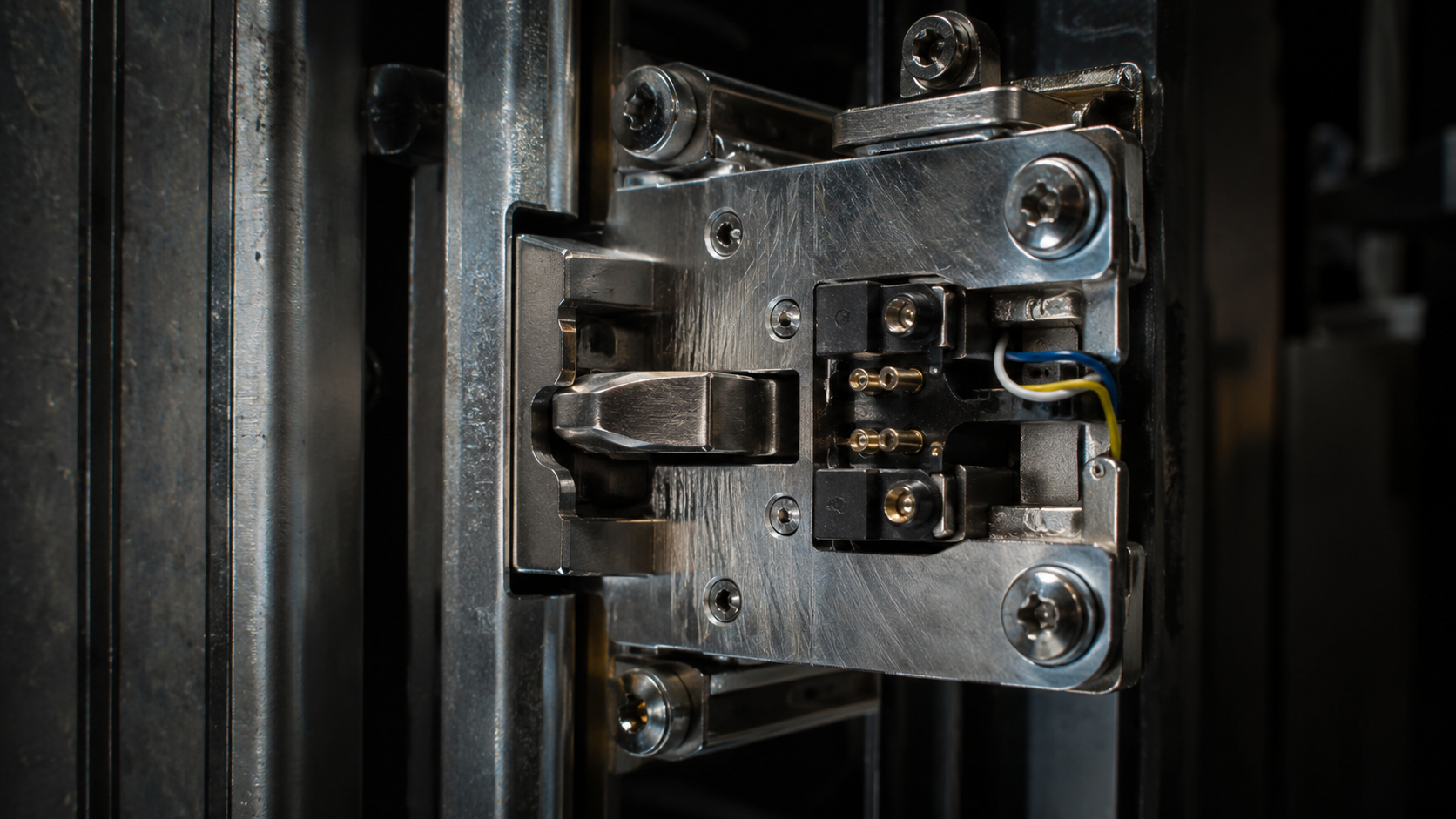
Every elevator has two types of doors: the car door (which travels with the cab) and the hoistway doors (one at each landing). For the elevator to move safely, both sets of doors must be closed and locked. The door lock monitoring system uses three layered controls:
- Door position sensor: Confirms that the door panels are physically in the fully closed position.
- Door interlock contacts: Mechanical contacts that close only when the lock is engaged, completing the safety circuit.
- Redundant monitoring relay: A separate electronic check that verifies the interlock contacts match the physical state of the door. If the contacts read closed but the door is open, the relay disables the car.
That third layer, redundant monitoring, is what ASME A17.1 added in the 2000 code revision after a series of fatal accidents caused by faulty or bypassed interlocks. It is the most important code requirement of the last 25 years.
Why This System Matters: The Accidents It Prevents
Without functioning door lock monitoring, an elevator can move with the hoistway door open. This is the single most dangerous scenario in vertical transportation. Documented accident types include:
- Falls into the hoistway: A passenger steps toward what appears to be a stationary car at floor level, but the cab has left or is at a different floor. With a defeated interlock, the door opens to an empty shaft.
- Shearing injuries: The elevator starts moving while a passenger is partially in or out of the cab. Failure to detect the door state can trap a person between the cab and the landing.
- Entrapment with door open: The cab moves off-level with the door still open, exposing passengers to the shaft and creating fall risk.
- Service technician fatalities: Roughly half of elevator-related deaths in the U.S. involve people working in or near elevators, and bypassed or faulty door locks are a well-documented contributor to these accidents. Proper monitoring prevents a bypass from being forgotten or undetected.
ASME A17.1 and Florida Code Requirements
Florida adopts the ASME A17.1 Safety Code for Elevators and Escalators, which sets explicit requirements for door lock monitoring:
- Section 2.26.5: Requires redundant monitoring of door interlock circuits for all new and modernized elevators.
- Fault detection: If the monitoring relay detects a mismatch, the elevator must be removed from service automatically until manually reset by a qualified mechanic.
- Annual inspection: Florida's annual state inspection includes a specific test of the door lock monitoring circuit. Failure of this test results in the elevator being taken out of service.
- Modernization triggers: Any major modernization of an elevator originally installed under earlier code editions must bring the door lock monitoring system up to current standards.
Warning Signs Your Door Lock System May Be Failing
Door lock issues rarely happen all at once. Operators usually see warning signs weeks or months before a serious failure:
- Doors that nudge repeatedly: The doors close partway, reopen, and try again. This is often a contact alignment issue.
- Elevator stops between floors: The monitoring relay detected a brief mismatch and shut the system down as designed.
- Unusual delays before departure: The controller is waiting for an interlock confirmation it is not getting cleanly.
- Increased entrapment calls: Each entrapment caused by a door lock fault is the system working correctly, but it also tells you the underlying mechanical problem is getting worse.
- Audible chatter from door equipment: A buzzing or clicking sound at the landing often means a contact is intermittently failing.
None of these symptoms should be ignored. They are early indicators of a safety critical fault.
Maintenance Practices That Keep the System Working
Door lock systems are mechanical and electrical, exposed to dust, vibration, and constant cycling. Proper maintenance is essential:
- Quarterly interlock inspection: Check every landing for contact wear, alignment, and proper engagement of the locking pin.
- Clean door tracks and sills: Debris in tracks causes doors to bind, putting strain on lock components.
- Test the monitoring relay annually: A qualified technician can simulate a fault to confirm the relay is actually disabling the system as designed.
- Document every interlock service: A clear maintenance log shows inspectors that the system is being properly maintained and helps identify recurring issues.
- Never bypass interlocks for convenience: The most common cause of door lock related fatalities is a technician who jumpered an interlock during service and forgot to remove the bypass. Modern monitoring systems make this much harder, but discipline still matters.
When Modernization Is the Right Answer
If your elevator was installed before 2000 and has not been modernized, your door lock monitoring system likely does not meet current code. Common deficiencies in older systems include:
- Single circuit interlocks without redundant monitoring
- Worn mechanical contacts that no longer make reliable connections
- Relay logic controllers that cannot perform the cross check required by current code
- No automatic shutdown when a fault is detected
Modernizing the door lock monitoring system is rarely a standalone project. It is part of a broader controller modernization. But it is one of the strongest reasons to modernize: a controller upgrade is the only way to bring an older elevator up to current safety standards without a full replacement.
How BROUSS Keeps Florida Buildings Safe
Every preventive maintenance visit we perform includes door lock and interlock inspection on every landing. Every modernization quote includes a specific line item for the door lock monitoring system. And every annual inspection we perform tests the system the way Florida code requires.
If your building has not had a formal door lock evaluation in the last 12 months, we recommend scheduling one. It is the lowest cost, highest impact safety review you can do for your elevator.