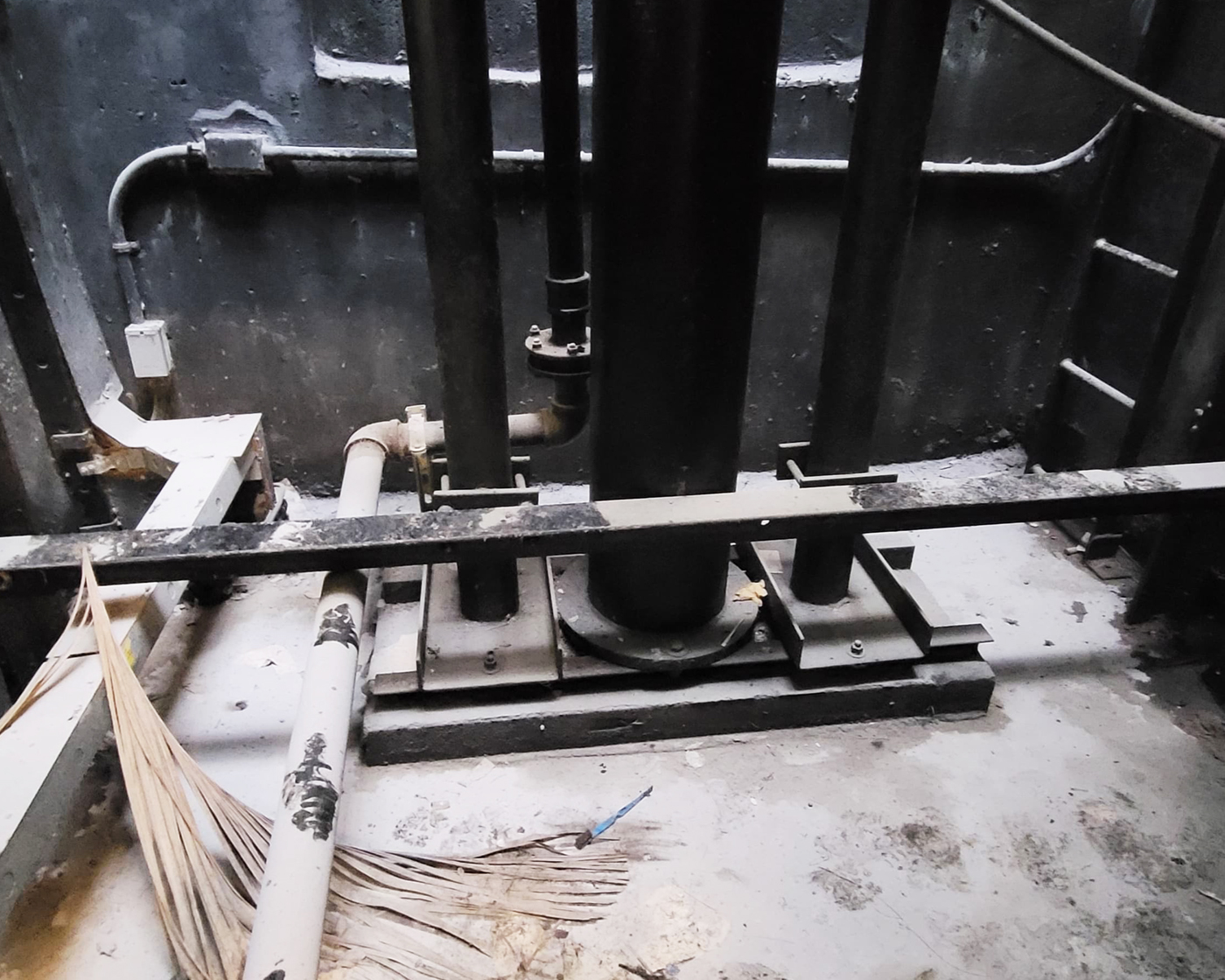
Water, oil, mold and rust all start at the bottom of the shaft, and that is exactly where the inspector looks. We clean it out, seal it, and hand back a pit that holds up.
Check your pitA neglected elevator pit breeds mold, mosquitoes, bad odors and costly corrosion, and it can fail your city inspection. Brouss cleans, seals and restores the pit to a dry, code-ready condition.
Request Service
Before Pit Restoration

After Pit Restoration
Scope of work
A pit restoration is not one job, it is whichever of these your pit actually needs. Hover or tap a card to see what it fixes. After a site visit we quote only the ones that apply.
Clears debris, silt and grime off the pit floor and out of the sump.
Buildup, an odor, or before any city inspection.
Kills the mold and bacteria behind musty smells in the shaft.
The pit smells or shows visible growth.
Extracts water fouled with hydraulic oil and hauls it off-site through licensed disposal.
Oil or hydraulic fluid has pooled in the pit.
Rebuilds cracked, spalling or crumbling pit walls and floor.
The structure is damaged or letting water through.
Seals the pit against groundwater and storm intrusion.
Water keeps coming back or marks climb the walls.
Leaves a durable, cleanable finish that protects the repaired surfaces.
After cleaning and repair, to keep the pit inspection-ready.
Supplies, wires and tests a working pump so water cannot accumulate.
There is no pump, or it no longer runs.
Scheduled inspection and cleaning so the pit stays dry and compliant.
To stop the problem from coming back.
Straight answers about restoring an elevator pit: scope, downtime, water, waste and permits.
It depends on what we find. Cleaning, degreasing and sanitizing a pit is a short job. Add concrete repair, a waterproofing system that has to cure, or a new sump pump, and the visit grows. You get the schedule with your proposal — including any hours the unit is out of service — before we start.
Yes, but not for as long as you would think. Work in the pit means the car has to be parked and the unit locked out while our technicians are down there. We schedule around your building — early mornings, evenings or weekends — and in buildings with more than one unit we work them in sequence so you are never without service.
In Florida it is usually groundwater and a high water table pushing through the concrete, not a leak from above. Other common sources are storm runoff finding the hoistway, a failed or missing sump pump, and condensation from HVAC lines routed through the shaft. Sealing the pit only holds if the pump is working too, which is why we look at both. Run the pit self-check to see what your symptoms point to.
There is no single number — it tracks your conditions. A dry pit in a low-traffic building needs far less attention than one near the water table, in a garage, or under a unit that leaks hydraulic oil. The practical answer is that the pit should be inspected on every preventive maintenance visit and cleaned whenever that visit says so, which is exactly how our maintenance program treats it.
It does not go down a drain. Water contaminated with hydraulic oil or lubricant is collected, containerized and taken off site for disposal through licensed handling — not flushed into the building's plumbing or the storm system. That protects the building from the liability as much as it protects the pit.
Cleaning, sanitizing and painting generally do not. Structural concrete repair, a new sump pump with electrical work, or anything that changes the equipment can, and it varies by jurisdiction across Miami-Dade, Broward and Palm Beach. We tell you which category your job falls into up front, and when a permit is required we file it and see it through the closing inspection.
Still have questions? Call 786.308.9128