Accessibility Is More Than a Legal Requirement
The Americans with Disabilities Act (ADA) was signed into law over 30 years ago, yet many buildings across Florida still fall short of accessibility standards. Whether you’re managing a condo, retail space, medical office, or house of worship, ensuring that everyone can access your property isn’t just a legal obligation—it’s a reflection of your commitment to the community.
At BROUSS Elevators, we specialize in installing and maintaining accessibility lifts that bring buildings into compliance while providing safe, dignified access for all.
Understanding ADA Elevator Requirements
The ADA requires that public buildings and many private facilities provide accessible routes to all floors served by an elevator. Specific requirements include:
- Cab size (2010 ADA Table 407.4.1): 68 in. wide × 51 in. deep for side-opening doors; 80 in. wide × 51 in. deep for centered doors (alternative 54 × 80 or 60 × 60 configurations are permitted with any door location)
- Door width: Minimum 36 inches clear opening (42 inches for the centered-door configuration)
- Controls: Buttons no higher than 48 inches from the floor, with Braille and raised characters
- Audible signals: Floor announcements and directional signals
- Door timing: Doors must remain open long enough for wheelchair users to enter and exit safely
- Floor leveling: The car must level within ½ inch of each landing
Types of ADA-Compliant Lifts
Limited Use/Limited Application (LULA) Elevators
LULA elevators are a popular choice for low-rise buildings of two to three floors that don’t require a full commercial elevator. They offer:
- Smaller footprint than commercial elevators
- Lower installation cost
- Full ADA compliance
- Travel up to 25 feet (most models)
- Ideal for churches, small offices, restaurants, and historic buildings
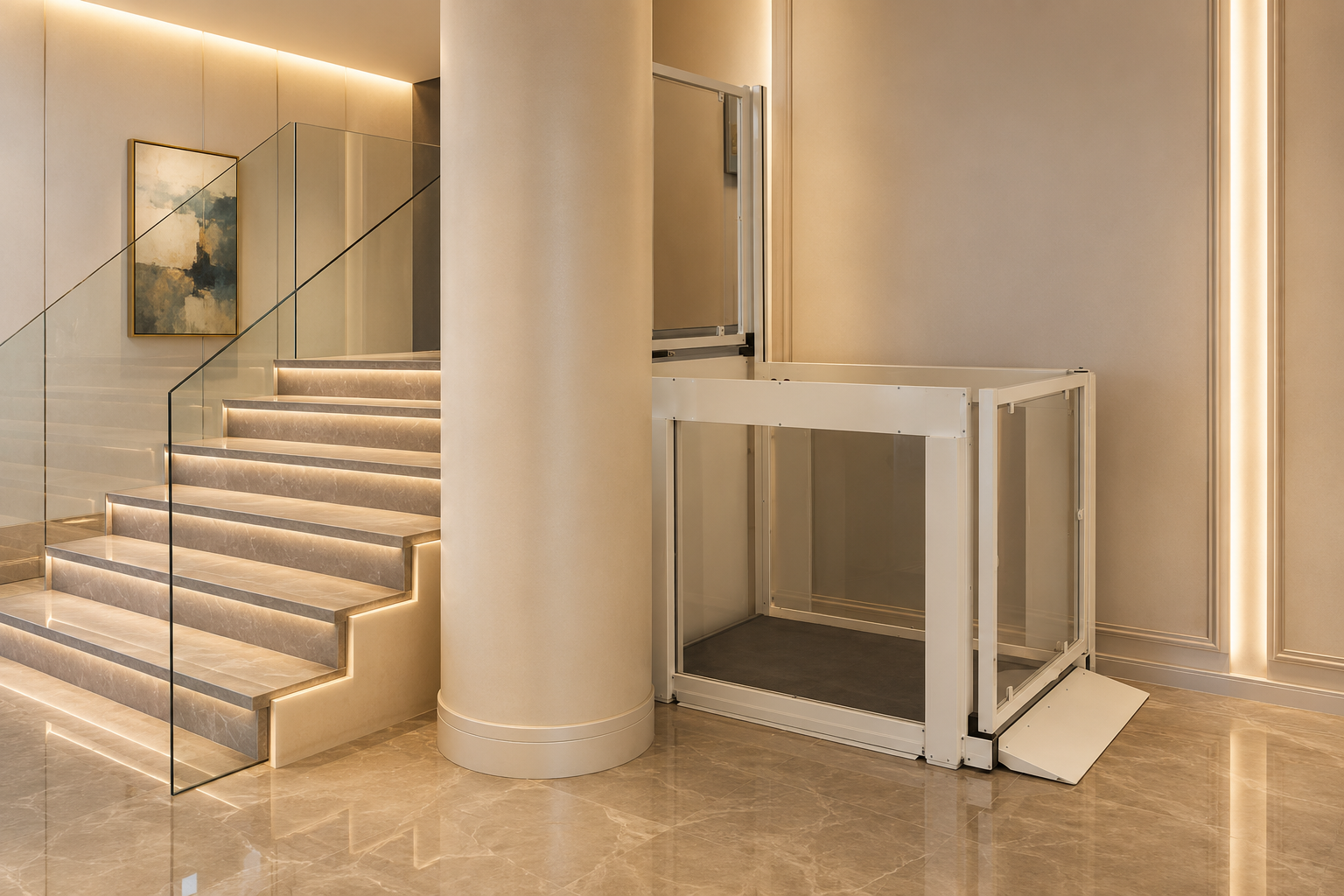
Vertical Platform Lifts (VPLs)
Vertical platform lifts are designed to transport wheelchair users between two levels, typically up to 14 feet of travel. They’re commonly used for:
- Stage access in auditoriums and theaters
- Split-level building entrances
- Porches and raised platforms
- Areas where a full elevator isn’t practical
Inclined Platform Lifts
These lifts travel along a staircase, carrying a wheelchair user on a platform. While less common, they can be the right solution for buildings where vertical lift installation isn’t feasible.
When Is an ADA Lift Required?
In Florida, ADA accessibility is required for:
- All new commercial construction
- Existing buildings undergoing major renovations
- Public accommodations (restaurants, retail, hotels, medical offices)
- State and local government buildings
- Common areas of residential buildings with four or more units (under the Fair Housing Act’s design requirements; the ADA additionally covers areas open to the public, such as rental offices)
Even if your building was constructed before the ADA, you may still be required to make "readily achievable" accessibility improvements.
The Cost of Non-Compliance
ADA violations can result in:
- Civil penalties in Department of Justice enforcement actions, which currently exceed $115,000 for a first violation and $230,000 for subsequent violations (adjusted annually for inflation)
- Private lawsuits (Florida is one of the most active states for ADA litigation)
- Required remediation at your expense
- Damage to your business reputation
In Florida, ADA-related lawsuits have increased significantly in recent years. Proactive compliance is far less expensive than reactive litigation.
Beyond Compliance: The Business Case
Making your property accessible opens your doors to a larger market. People with disabilities, seniors, and parents with strollers all benefit from accessible buildings. In Florida’s aging population, accessibility features can be a competitive advantage that attracts and retains tenants, customers, and visitors.