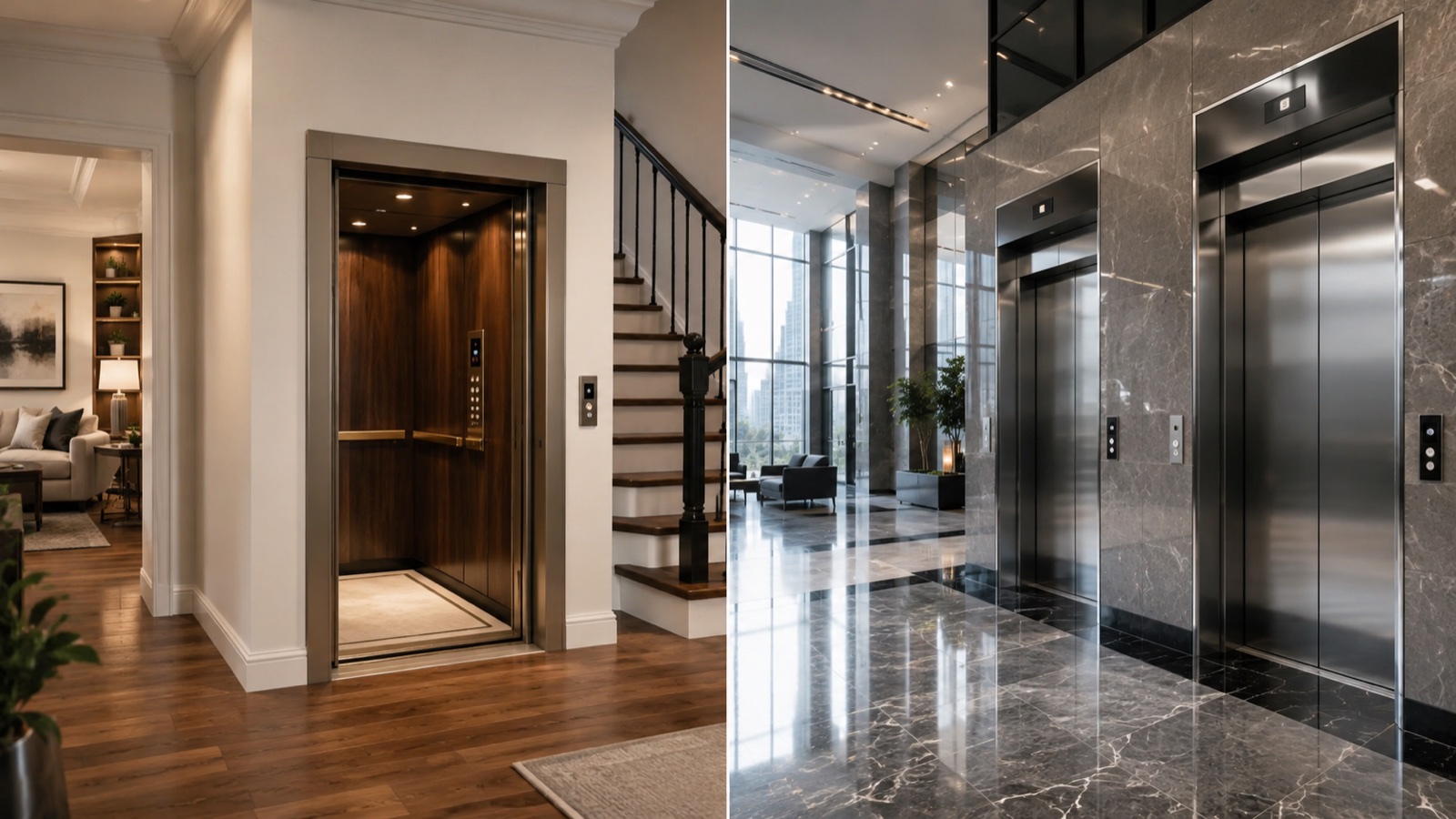
Not all elevators are created equal. The elevator in your office building operates very differently from the one in your condo, and understanding these differences helps you maintain them properly and set appropriate expectations.
Commercial Elevators: Built for Volume
Commercial elevators serve office buildings, hospitals, shopping centers, and similar high-traffic environments.
Key Characteristics
- Higher capacity: Typically 2,500-5,000 lb capacity
- Faster speeds: 200-500+ feet per minute (compared to 100-150 fpm residential)
- Larger cabs: Designed for wheelchair access, stretchers, and freight
- More stops: Often serve 10-50+ floors
- Higher traffic volume: Hundreds to thousands of trips daily
Maintenance Considerations
- More frequent service required due to higher usage
- Door systems experience significant wear
- Destination dispatch systems require specialized expertise
- Multiple elevator coordination (traffic algorithms)
- After-hours access for maintenance is easier
Residential Elevators: Built for Living
Residential elevators serve condos, apartment buildings, and private homes.
Key Characteristics
- Lower capacity: 1,000-2,500 lb capacity typical
- Slower speeds: 100-150 feet per minute
- Smaller cabs: Adequate for daily use, not stretcher-rated unless specified
- Fewer stops: Usually 2-20 floors
- Lower traffic: Tens to hundreds of trips daily
Maintenance Considerations
- Less frequent service typically adequate
- Peak usage during morning and evening hours
- Resident complaints require diplomatic handling
- Scheduling maintenance around resident schedules
- Aesthetic maintenance (cab interiors) is important
Code Differences
Florida applies different code requirements:
- Commercial elevators must meet ASME A17.1 commercial requirements
- Residential elevators in homes may use ASME A17.1 Section 5.3 (private residence elevators); low-traffic public buildings can sometimes use Section 5.2 limited-use/limited-application (LU/LA) units
- Condo/apartment elevators typically require full commercial code compliance
- Fire service requirements differ based on building classification
Cost Differences
Installation
- Commercial elevator installation: $100,000-500,000+
- Mid-rise residential: $75,000-200,000
- Private home (private residence elevator): $25,000-75,000
Maintenance
- Commercial high-rise: $500-1,500/month per elevator
- Condo/apartment: $300-700/month
- Private home: $100-300/month
Choosing the Right Equipment
When planning new construction or modernization, consider:
- Daily traffic counts and peak usage patterns
- Building height and speed requirements
- Freight or stretcher service needs
- Energy efficiency goals
- Future building use changes
Expertise Matters
Some elevator companies specialize in one type or the other. At Brouss Elevators, we service both commercial and residential systems throughout Florida. Our technicians understand the unique requirements of each environment.
Questions about your building's elevator needs? Call 786.308.9128 for expert guidance on residential or commercial systems.