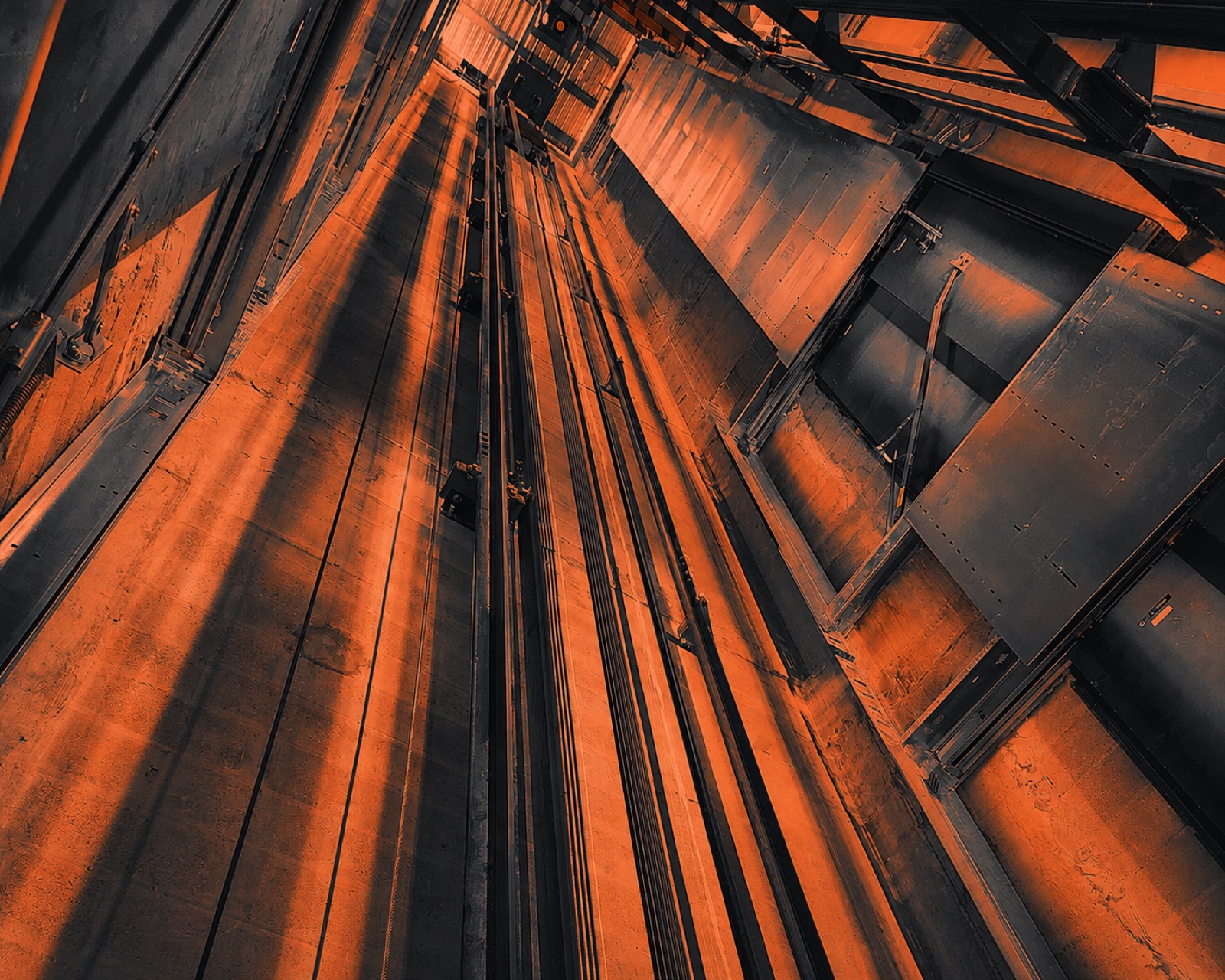
Taking an elevator out is a permitted job, not a demo-crew job. Brouss files the permits, removes the equipment safely, handles the hydraulic oil, seals the hoistway, and closes the unit out with the city and the state — so nothing about it follows you afterward.
Build your removal scopeThe removal, in plain terms
Whether you are clearing out a unit that no longer runs, making room for a new installation, or repurposing a shaft, an elevator has to come out to code. Brouss works with you or your contractor from the first permit to the final sign-off — and closes the device out with the State of Florida so it stops costing you money once it is gone.
We pull the demolition or alteration permit with your building department — Miami-Dade, Broward or Palm Beach — and register the scope. Removing a permitted device is itself a permitted change, and skipping it is what leaves an owner with an open record.
Power and the emergency phone line are disconnected, then the car, counterweight, machine, controller, governor, ropes, guide rails and fixtures come out in a controlled sequence. Nothing is torn out.
On hydraulic units we drain and containerize the oil for licensed off-site disposal, and the in-ground cylinder is pulled or safely abandoned to code. This is the part a general demolition crew is not equipped to handle.
Every landing opening is sealed or guarded so no one can fall into an open shaft, and the pit is left ready for whatever comes next — infill, a new unit, or your general contractor.
We cancel the device registration with the State of Florida so the annual fees and inspection notices stop, then schedule and attend the closing inspection so the permit is signed off and the elevator is legally gone.
Removal scope builder
Tick everything that describes the elevator you want gone. You get back the exact scope that situation calls for, why each step matters, and a summary you can hand us — so your proposal is a real number, not a guess.
Start with your situation
Most owners come to us with a unit that no longer runs, a new elevator going in, or a note from the state about fees on a device they forgot they still had. Pick anything that sounds like yours.
Your removal scope
Why it matters
Not sure where to start? Tell us the building and the unit — 786.308.9128 or request a removal assessment.
Why bother removing it
A dead or idle elevator still costs you every year it stays on the books. Taking it out the right way ends the fees, the liability and the hazard in one move.
A registered elevator keeps billing the State of Florida whether it runs or not. Deregistering the device is what actually ends the yearly charge.
No device means no CAT-1 or CAT-5 obligations, no re-inspections to schedule, and no violation risk hanging over the address.
A dead or open shaft is a fall and fire risk you still own. Sealing the openings and closing the permit out ends that exposure for good.
Reclaim the shaft for other use, or hand a code-safe opening to your general contractor without holding up the rest of the job.
Straight answers about taking an elevator out: permits, hydraulic oil, state fees, the shaft and downtime.
Yes. Removing a registered device is a permitted change, not an off-the-books teardown. We file the demolition or alteration permit with your building department and carry it through the closing inspection. Doing it without a permit is exactly what leaves an open record on the property.
The oil is drained, containerized and taken off site through licensed disposal — never flushed into a drain or the storm system. The in-ground cylinder is pulled or safely abandoned in place to code. A general demolition crew is not set up for either, which is why hydraulic removals belong with an elevator contractor.
Not once we deregister it. An elevator stays on the State of Florida books — with annual fees and inspection notices — until its registration is formally canceled. That closeout is the step owners most often miss, and it is built into every removal we do. Build your scope to see it listed.
It depends on the type and the shaft. A single hydraulic or traction unit is usually a short job; coordinating with a new installation or a shaft demolition adds time. You get the schedule with your proposal, including any building access we need, before we start.
We strip the equipment and make the hoistway safe — openings sealed, pit cleared, nothing live left behind. Structural demolition or infill of the shaft itself is usually your general contractor's scope, and we coordinate the handoff so the elevator side never stalls their work.
Yes. In multi-unit buildings we isolate the unit being removed and work it in sequence, so the building keeps elevator service the whole time. We schedule around occupancy the same way we do on a modernization.
Still have questions? Call 786.308.9128